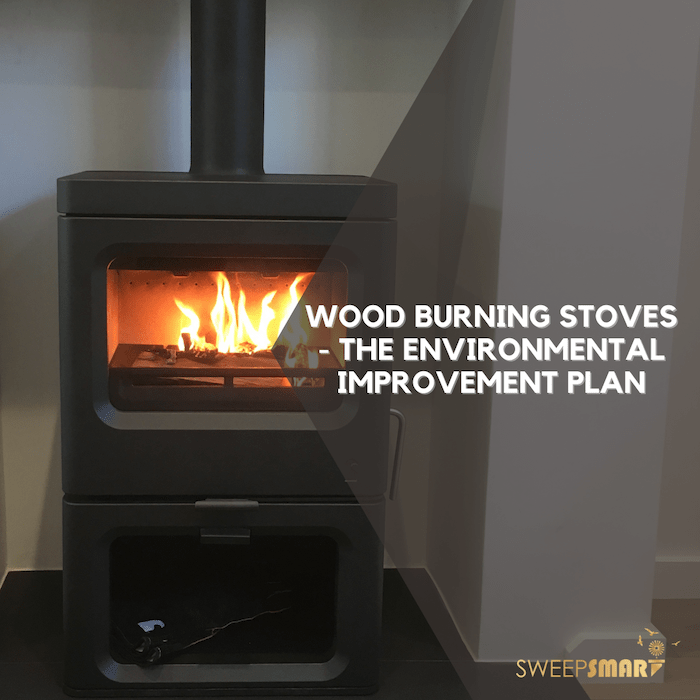
There have been a few attention-grabbing headlines recently “Homes face ban on wood‑burners”. There are NO plans to ban wood-burners.
The Environment Secretary Michael Gove has published a Clean Air Strategy. The new strategy, which is now out for consultation, includes plans for banning the sale of INEFFICIENT stoves and polluting fuels, and putting more restrictions on Smoke Control Areas. You can still have a fire, but we must make some changes.
There is a problem with air quality in the UK which can cause health issues for all of us. Wood burning stoves and open fires are responsible for a part of this problem. According to the government report, burning solid fuel (such as wood and coal) currently produces 38% of the UK’s emissions of particulate matter.
Peter Ticktin founder of the Global Warming Foundation adds “Wood is a renewable form of energy. Like Oil, Coal, or natural gas, even the cleanest burned fuel converts chains of hydro-carbons into CO2 and H2O, carbon dioxide and water.Hence, those who are burning wood for heat should not be encouraged in any way to convert to fossil fuels, even if the wood burning is not as “clean” as the burning of fossil fuels.”
How does the new strategy affect domestic combustion?
- Only the very cleanest stoves can be bought and installed
All stoves must be at least 80% efficient. Ecodesign is the European-wide programme to lower emissions. It is due to come into force for stoves in the UK in 2022. The PM emissions limit for Ecodesign is 55% lower than for DEFRA exempt stoves.

- Only the cleanest fuels are available for sale
Restrict the use of bituminous house coal and high-sulphur smokeless fuels. There is already a limit in Smoke Control Areas on burning fuel containing more than 2% of sulphur. It plans to extend this nationwide and ensure that there is more clarity around the sulphur content of fuel when sold.
- New powers for local government
For areas with high pollution, local authorities will have powers to go further and could introduce ‘no burn days’ during periods of high pollution.
How does this affect you?
For now, nothing has changed. The strategy is still in draft form and will be out for consultation until 14 August 2018. Findings from this will feed into the final long-term strategy that will be published in March 2019.
Wood burning stoves and open fires are responsible for a part of this problem and if we understand why, we can make a big difference to local air quality. For example, with correct use, the impact of a woodburning stove can be reduced by a whopping 80%!
Burnright is an excellent campaign created to be a source of impartial advice and information on how to use a domestic fire correctly, lower emissions and save money on fuel.


For more information on using you wood-burner correctly, please read our blog regarding London’s air quality. You can read the draft in full here.

Related Posts